Building Guide
8 Popular Architectural Styles in Cache Valley, Utah
From historic Victorians on Logan's Center Street to mountain modern retreats in the foothills, here are the architectural styles that define Cache Valley homes — and how to choose the right one for your custom build.
Drive through Cache Valley and you'll see more than a century of homebuilding layered into one landscape: brick Victorians near downtown Logan, ramblers in established neighborhoods, and modern farmhouses rising on new lots in Providence and Nibley. If you're planning a custom home in Cache Valley, understanding the architectural styles that work here — with our heavy snow loads, four true seasons, and mountain views — is the first step toward a design you'll love for decades.
Here are the eight architectural styles we see most often in Cache Valley, what defines each one, and where they fit best.
1. Modern Farmhouse
The modern farmhouse has been the most requested style for new custom homes in Cache Valley over the past several years, and it's easy to see why. It pairs the region's agricultural heritage with clean, contemporary lines.
Key characteristics:
- White or light-colored board-and-batten or lap siding
- Standing-seam metal roof accents, often in black
- Large front porches with simple square columns
- Black-framed windows and minimal ornamentation
- Open floor plans with vaulted great rooms
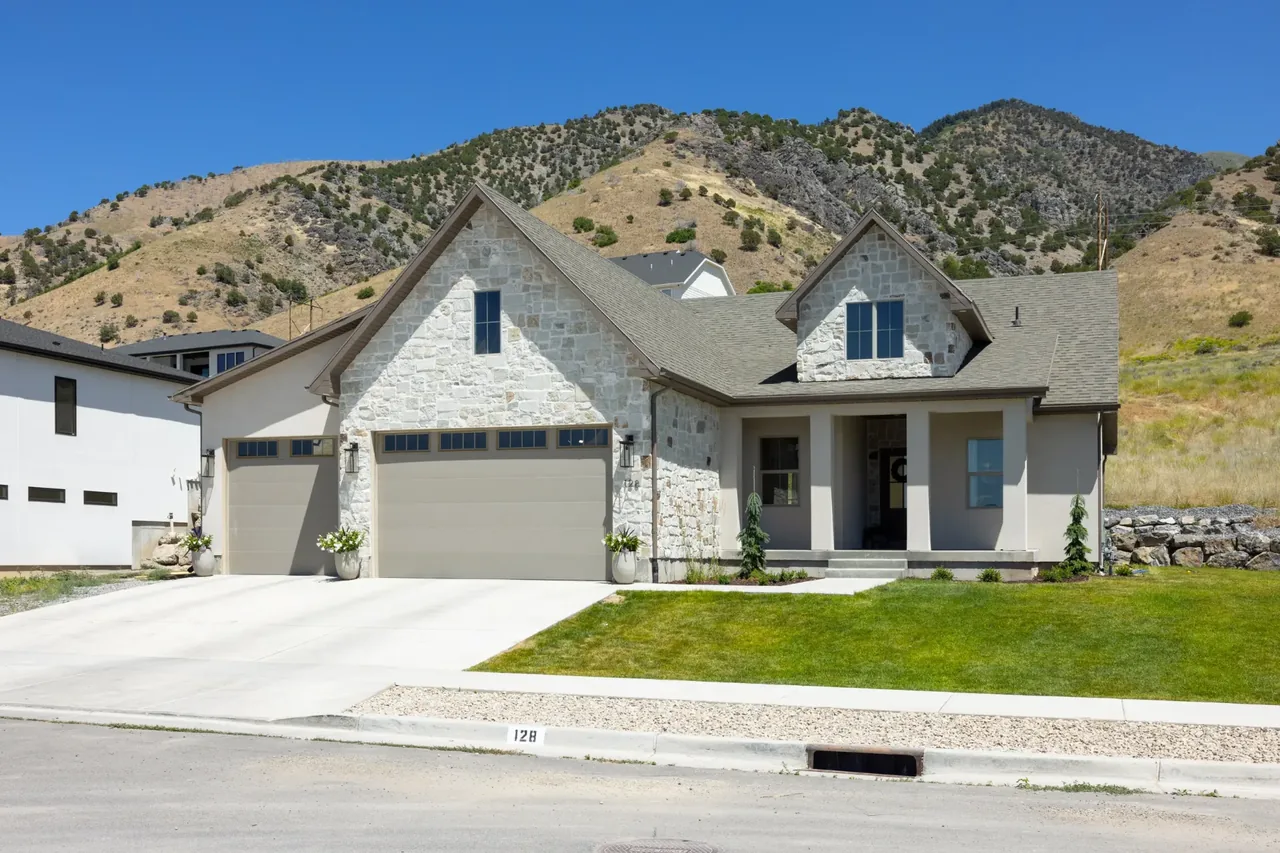
Best fit: New subdivisions like Willow Lakes and Shoreline Estates, and view lots in Millville and Nibley where a wide porch can face the Wellsville Mountains.
2. Craftsman
Craftsman homes have deep roots in Cache Valley — entire blocks of Logan's older neighborhoods are filled with early 1900s bungalows. The style emphasizes handwork, natural materials, and honest construction.
Key characteristics:
- Low-pitched gabled roofs with wide, overhanging eaves
- Exposed rafter tails and decorative brackets
- Tapered columns set on stone or brick piers
- Mixed exterior materials: shingle, stone, and siding
- Built-in cabinetry and detailed interior trim
Best fit: Infill lots in Logan and established Smithfield neighborhoods, where a Craftsman design respects the existing streetscape.
3. Ranch / Rambler
The single-story ranch became Cache Valley's workhorse style in the 1950s through 1970s, and it remains popular today — especially with buyers planning a forever home they can age in. Modern ranches often include a finished basement for extra space.
Key characteristics:
- Long, low single-story profile
- Attached garage as part of the main facade
- Open-concept main living areas
- Large picture windows facing views
- Main-floor primary suite and laundry
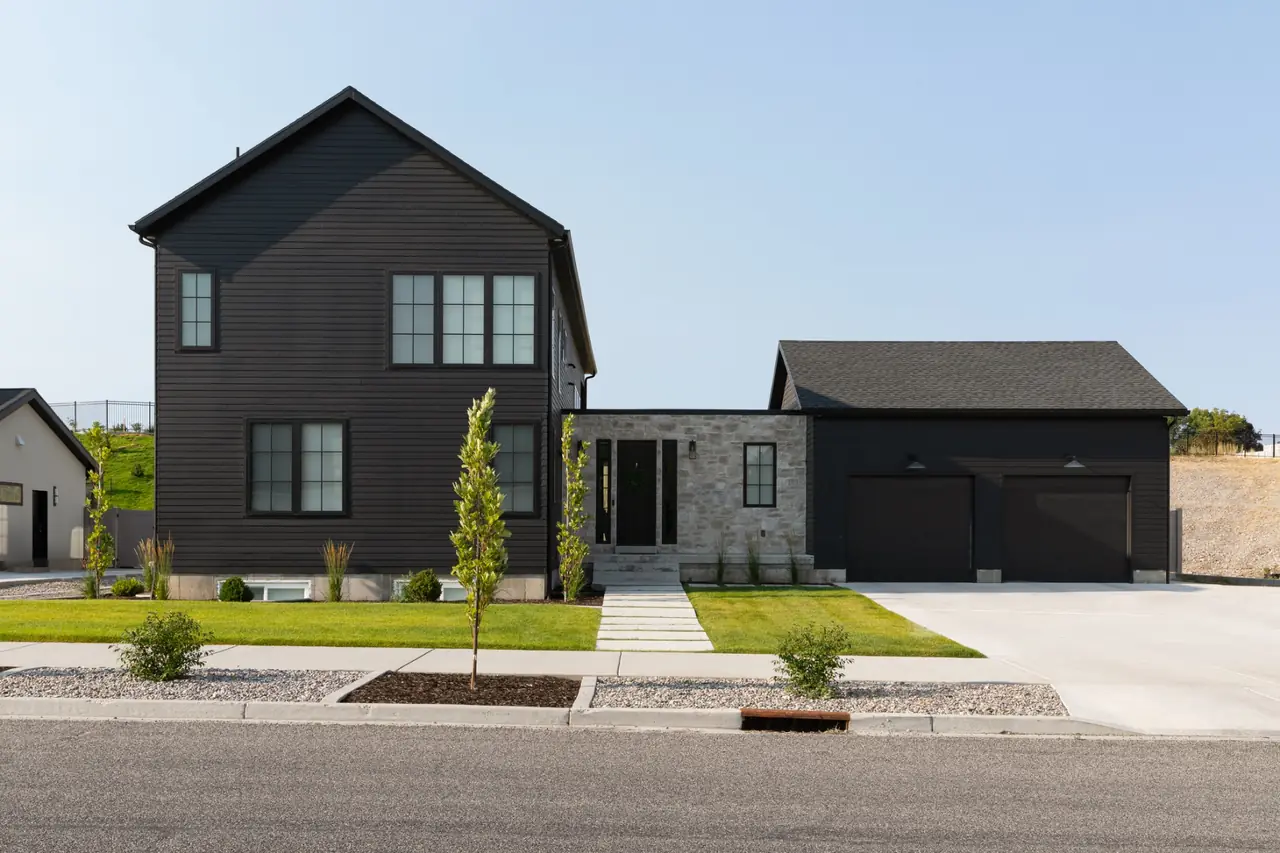
Best fit: Flatter lots in Smithfield, Hyde Park, and Hyrum, and for anyone who wants single-level living without giving up square footage.
4. Mountain Modern
Mountain modern is the fastest-growing style for view lots and foothills properties around Cache Valley. It borrows from both rustic mountain lodges and crisp contemporary design.
Key characteristics:
- Shed or low-pitch roofs with deep overhangs
- Walls of glass framing canyon or valley views
- Natural wood siding paired with stone or dark metal
- Exposed structural beams
- Indoor-outdoor living spaces with covered decks
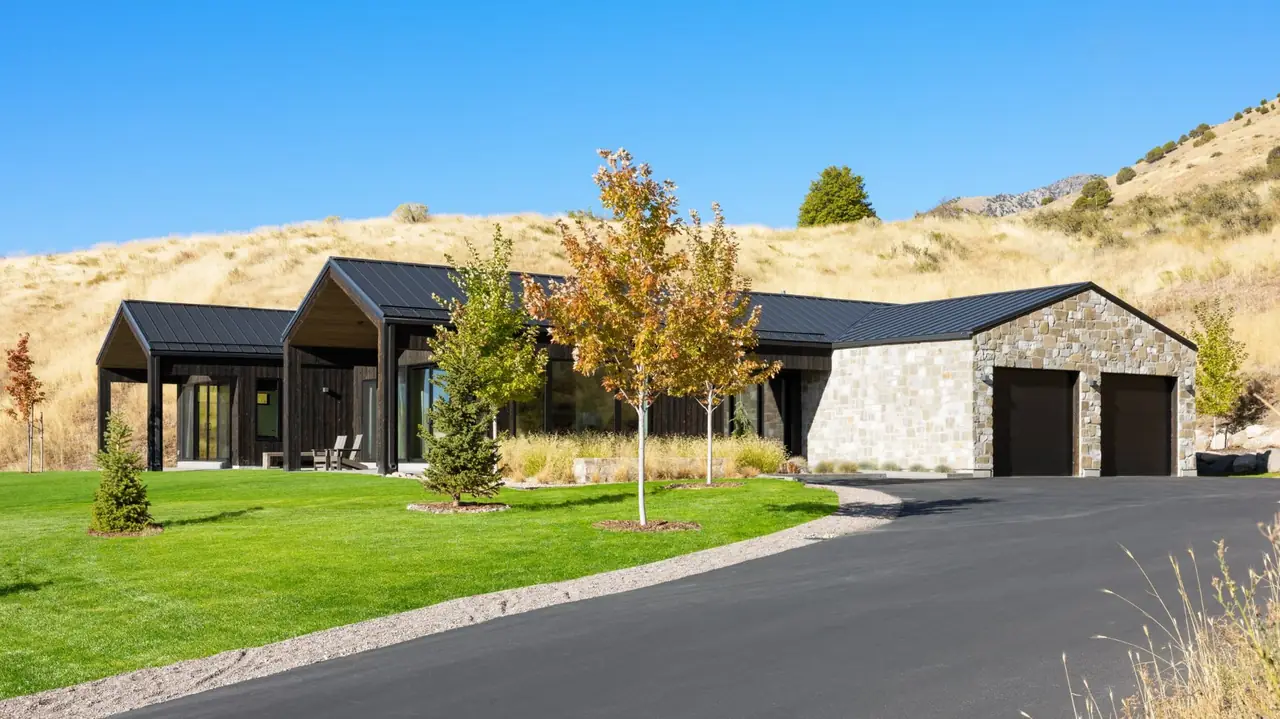
Best fit: Bench and foothills lots in Providence, River Heights, and Wellsville, where rooflines can follow the terrain and windows can capture the views.
5. Traditional / Colonial Revival
Symmetry, brick, and timeless proportions define the traditional style. Cache Valley's pioneer-era brick homes established brick as a signature local material, and many new builds carry that forward.
Key characteristics:
- Symmetrical front facade with centered entry
- Brick or brick-and-siding exteriors
- Gabled roof with dormers
- Double-hung windows with shutters
- Formal entry with defined living and dining spaces
Best fit: Established neighborhoods in Logan and North Logan, and for homeowners who want a classic look that never dates.
6. Historic Victorian
You won't build a new Victorian often, but Cache Valley has some of Utah's best-preserved examples — particularly along Logan's Center Street historic district. Understanding the style matters if you're renovating one.
Key characteristics:
- Steep, complex rooflines with gables and turrets
- Decorative trim, spindlework, and patterned shingles
- Wrap-around or ornate front porches
- Tall, narrow windows
- Bold, historically inspired color palettes
Best fit: Restoration and renovation projects in Logan's historic core — work that requires a builder who respects original detailing.
7. Prairie
Prairie-style homes, inspired by Frank Lloyd Wright, emphasize horizontal lines that echo the wide Cache Valley floor. It's a less common but striking choice for custom builds.
Key characteristics:
- Strong horizontal lines and flat or low-hipped roofs
- Broad, overhanging eaves
- Rows of casement windows
- Open interiors that flow between spaces
- Integration with the surrounding landscape
Best fit: Wide, flat lots with mountain backdrops — the horizontal profile complements Cache Valley's big-sky setting.
8. Contemporary
Contemporary design strips away ornament in favor of form, light, and material. In Cache Valley it usually appears in softened, warm interpretations rather than stark minimalism.
Key characteristics:
- Flat or single-slope rooflines
- Mixed materials: wood, metal, stucco, and glass
- Large windows and clerestories for natural light
- Asymmetrical, geometric forms
- Energy-efficient envelopes and modern mechanical systems
Best fit: View lots and modern-minded buyers in new developments who want something distinctly different from the neighborhood norm.
How to Choose the Right Style for Your Lot
Style and site should be decided together. A few Cache Valley-specific considerations:
- Snow load: Our winters demand robust roof structures. Styles with very flat or complex rooflines need careful engineering for local snow loads.
- Solar orientation: Styles with large glass areas should face views deliberately — south and west glass changes both comfort and energy bills.
- Slope: Mountain modern and walkout ranch designs take advantage of sloped foothills lots; flat lots suit farmhouses and ramblers. See our guide to what makes a good building lot in Cache Valley.
- Neighborhood context: Some developments have architectural guidelines. It's worth checking CC&Rs before falling in love with a style.
- Budget: Ornamentation costs money. Simple rooflines and rectangular footprints (ranch, farmhouse) generally build for less per square foot than complex Victorian or Prairie forms. Our cost to build guide breaks down current pricing.
At Duke Building Co., we complete the entire design — including style, materials, and engineering — before construction begins, so there are no surprises. If you're weighing styles for a Cache Valley lot, get in touch and we'll walk the property with you.
A Note on Transitional Style
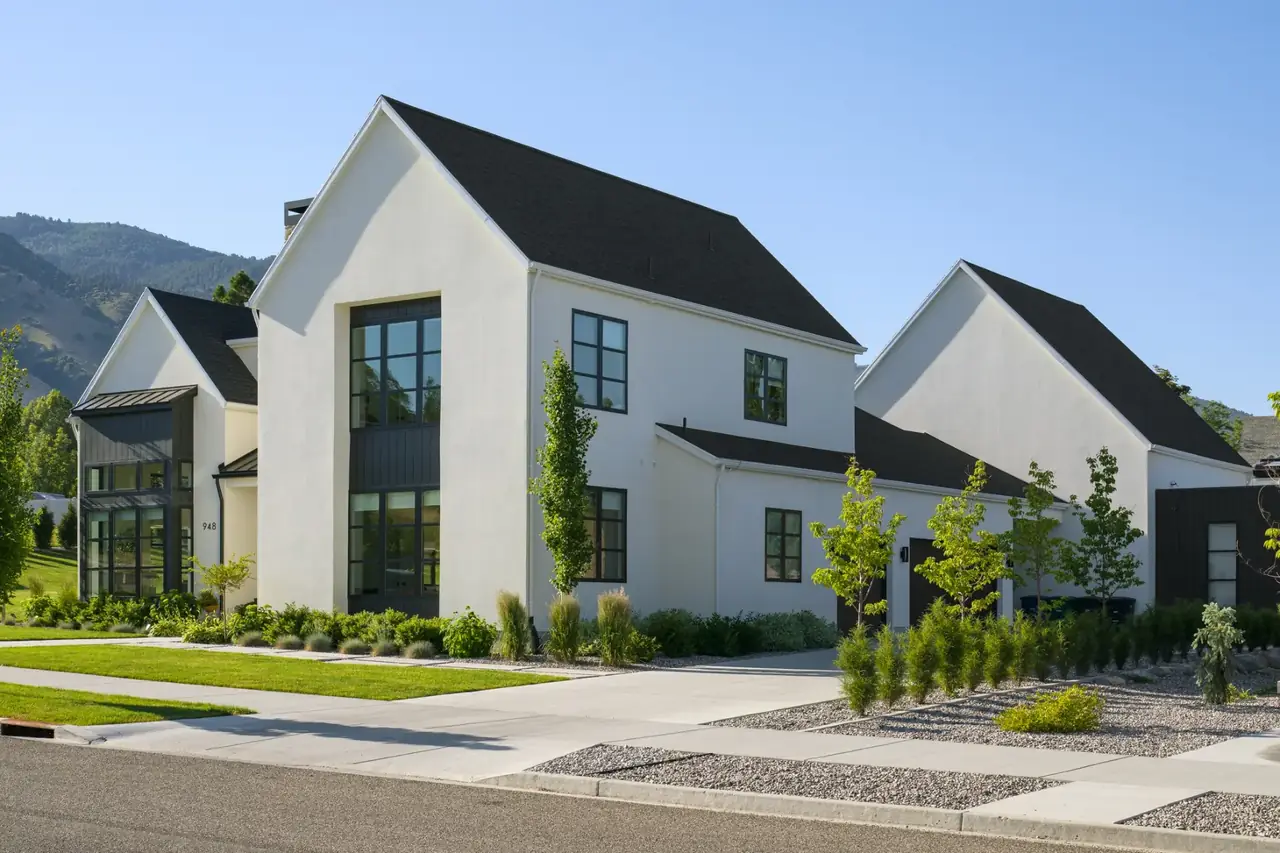
Not every home fits neatly into one category — and that's by design. Transitional homes blend traditional forms (pitched roofs, warm materials, familiar proportions) with contemporary detailing (cleaner trim, larger windows, simplified finishes). It's a popular request for clients who like elements of both classic and modern design, and it tends to age gracefully in any Cache Valley neighborhood.
Questions about Popular Architectural Styles in Cache Valley, Utah
What is the most popular home style in Cache Valley?
The modern farmhouse is currently the most requested style for new custom homes in Cache Valley, combining the valley's agricultural heritage with clean, contemporary lines. Craftsman bungalows and brick traditionals dominate Logan's historic neighborhoods, while ranch/rambler homes remain the most common style valley-wide.
What home style is best for a sloped lot in Cache Valley?
Mountain modern and ranch designs with walkout basements work best on sloped foothills lots in areas like Providence, River Heights, and Wellsville. These styles let the roofline and foundation follow the terrain rather than fighting it with expensive excavation and retaining walls.
Do architectural styles affect building costs in Cache Valley?
Yes. Styles with simple, rectangular footprints and straightforward rooflines — like ranch and modern farmhouse — typically cost less per square foot. Styles with complex rooflines, turrets, or extensive trim work (Victorian, Prairie) cost more due to additional labor and materials. In 2026, custom homes in Cache Valley generally run $180–$280 per square foot depending on style and finishes.
What roof style is best for Cache Valley snow?
Steeper pitched roofs (6:12 or greater) shed snow well and are common in farmhouse, Craftsman, and traditional designs. Flatter contemporary and mountain modern roofs can be built for Cache Valley but require engineered structural systems rated for local snow loads, which typically exceed 40 pounds per square foot at valley elevations and more in the benches.
Are there architectural restrictions in Cache Valley subdivisions?
Many newer Cache Valley subdivisions — including developments in Providence, Hyde Park, and Nibley — have CC&Rs with architectural guidelines covering exterior materials, colors, roof pitches, and minimum square footage. Always review the covenants before finalizing a home design for a specific lot.
Can you build a modern home in Logan's historic districts?
Building or significantly altering homes within Logan's historic districts may require review to ensure compatibility with the neighborhood's historic character. Outside designated districts, Cache Valley cities generally allow any architectural style that meets building and zoning codes.